Contributed by Tan Zheng Rui
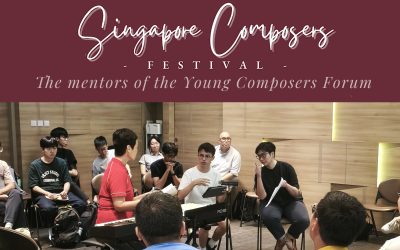
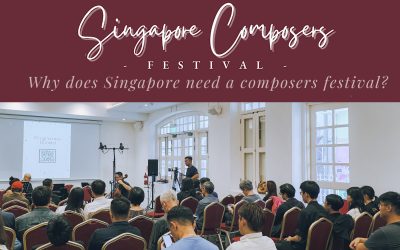
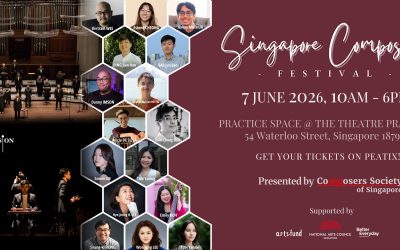
“Singapore has many prominent arts festivals, but none dedicated specifically to the work of Singaporean or Singapore-based composers.” This understanding of a gap in Singapore’s arts landscape propelled the Composers’ Society of Singapore (CSS) to stage the second edition of its flagship composition festival on 7 June 2026 at the Practice Space, The Theatre Practice. Prior to this composition festival, the third edition of the Young Composers’ Forum (YCF) last year brought together four established local composers and four selected young and aspiring composers for the mentorship programme. Each young composer was paired with an established local composer. Both the mentors and mentees each were supposed to write a piece for the festival’s ensemble-in-residence Singapore Youth Choir (SYC) Ensemble Singers, which were expected to be premiered for the festival’s matinee. The morning invited a local emerging ensemble Morse Percussion as performers, and a cross-country collaboration with Korean composers collective Space for Sound. It was a culmination of a year’s worth of planning and preparation/execution behind-the-scenes.
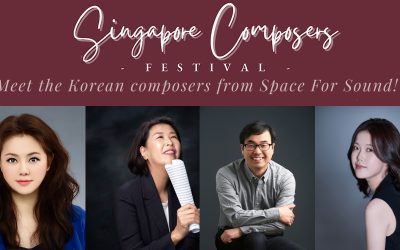
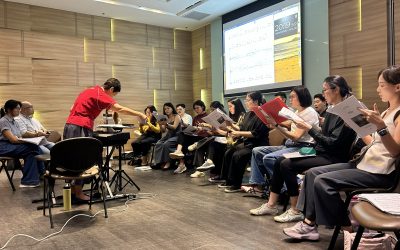
The current edition also held a roundtable discussion before the morning’s and afternoon’s performance respectively. For the morning’s talk, three established Singaporean composers, four Korean composers from Space for Sound and two performers from Morse Percussion formed the panel. Talks mainly focussed on two main ideas – process of actualising compositional ideas and culture and identity. Being born and raised here is a different experience from living in South Korea, or other parts of the world similarly, given our local established composers had lived abroad during the pursuit of their studies. Naturally, this correlates to their different compositional approaches. The afternoon’s talk generally leaned towards writing processes for a choral work and the interactions during the mentorship programme.
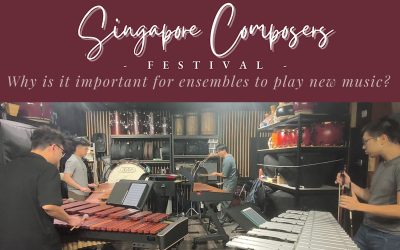
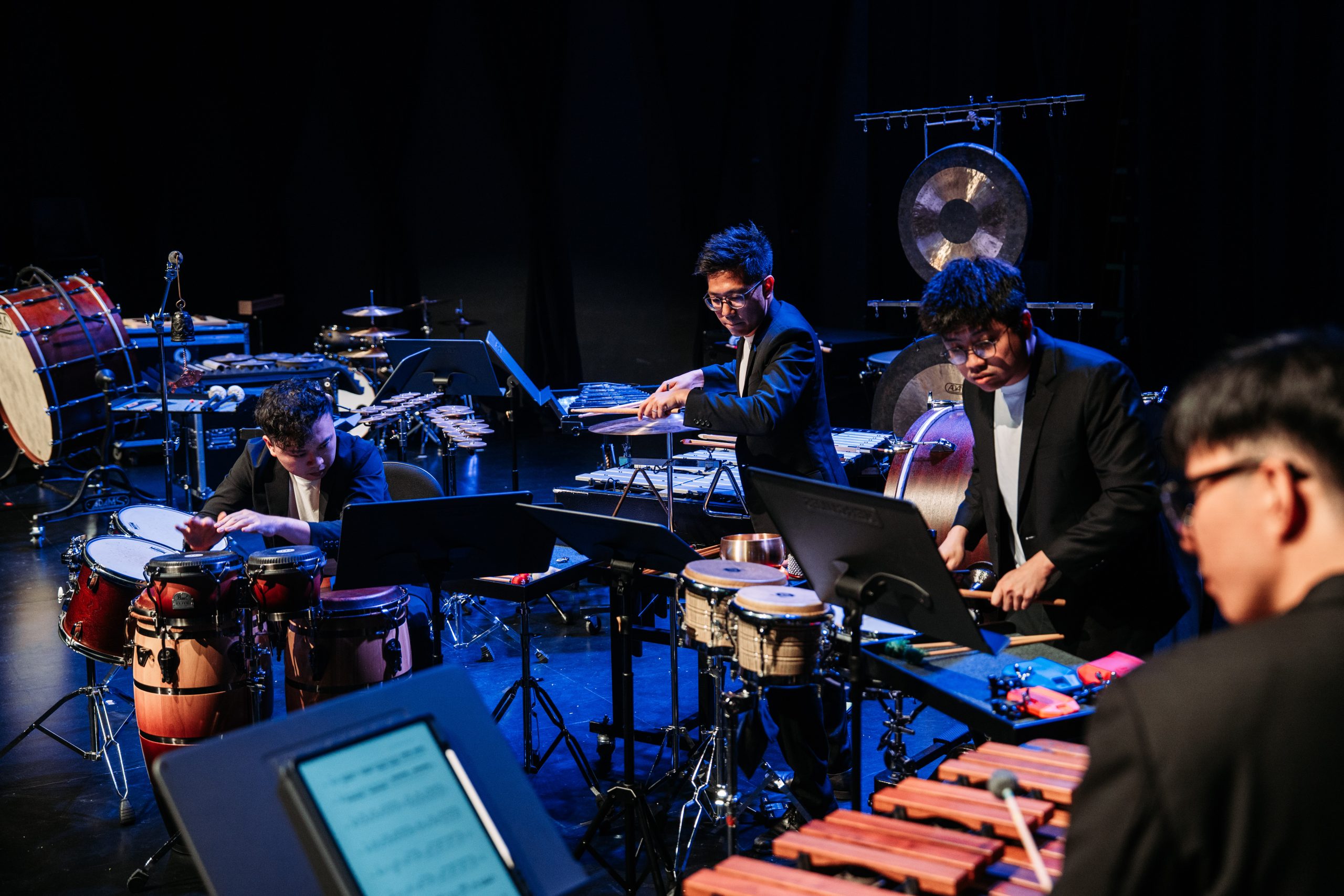
The notably dry acoustics of the venue afforded clarity, in a slightly disadvantageous manner. Toh Yan Ee’s Atlas explored the instability of superball dragging over the skin of the membranophones at the start of the piece, which gradually morphed into a rather beautiful thread in the texture of the first few sections of her piece. Yet, it was a slight pity that the venue curtailed the resonance of the soundscape. Lee Won Jung’s The Glittering Diamond Water extensively used pitched percussion to shape its sonic profile. Its initial soundscape piqued much interest, with resonances bleeding into each other. Nevertheless, its eventual stasis into rather constant, expected patterns is reminiscent of minimalist writings. Yet, for Lee Somin’s Death of First-Borns clarity enhanced the attention towards complicated textures formed from extensive playing techniques and harsh attacks; for Hoh Chung Shih’s Rounding Round, the near-linear growth in density and volume to the end coupled with performative gestures as the focus resulted in a convincing performance. The second half of the programme comprised pieces which were more accessible. Resonant Rituals and Percussion Sanjo incorporated Korean-associated rhythms as musical materials which develops with repetition. Emily Koh’s emoyo relied on repetitions as development, yet subverting expectations at various moments. Tan Yuting’s Kotekan consisted of three main materials which focussed on interweaving, and arranged these materials in a way the piece sustained interest.
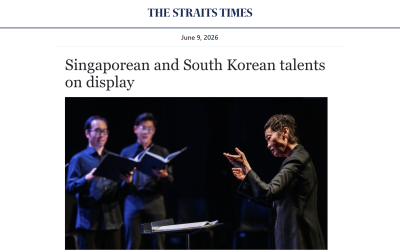
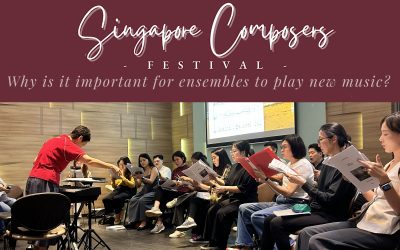
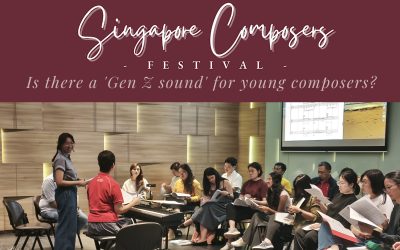
The SYC Ensemble Singers took the stage for the afternoon programme, featuring works which arose from both mentors and mentees during the mentorship programme. Anvay Mathur’s almost ritualistic anāhata was written sufficiently long for interest to retain since the piece is characterised mainly by long tones and shifting harmonies. Thomas Rettig Greenland and Bae Junsoos’s 빛을 luminate were rather cohesive. Ding Jian Han’s Silenc(E)mpty? uses various quotes from scientists as basis of material, and develops these materials by stretching the pronunciation of various words – each stretch sounding different too. This contemplative piece segued directly into Estene Cheong’s Why, a rather apt programming narratively, which explored a similar theme of existence, different ways of pronouncing a word of a single syllable and the blending of different sounds. Alicia de Silva’s Quando La Rota extracts certain verses from Dante’s Divina Commedia and sets it rondo-like, with certain pitch materials recurring. Danny Imson’s zen-like Ama Naman aptly closed the afternoon concert. Shifting textures between monophonic unison-singing and chorale then reached a state of blurred density where singers continued the chant and walked out of the stage area successively. Even as the texture on-stage faded and the stage became empty, it faintly pervaded off-stage for a while before its eventual silence.
This festival also highlighted how composition is not just a solitary affair, but its collaborative nature can realise the execution of ideas from paper to stage. For young aspiring composers, being part of this kind of festival provides an opportunity for their pieces to be heard, and learning opportunities for how well their pieces will actually work and are received. Being a participant of the mentorship programme in the first-edition of SCF two years ago catalysed my growth, and continued writing ever since. Furthermore, CSS has strongly believed in supporting the younger generation of composers through various programmes as a means of developing a local new music community. Such events can pull in more young composers to be part of this burgeoning local new music community. We look forward to future editions of this festival.