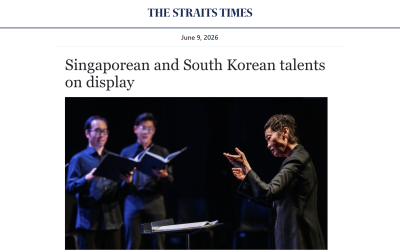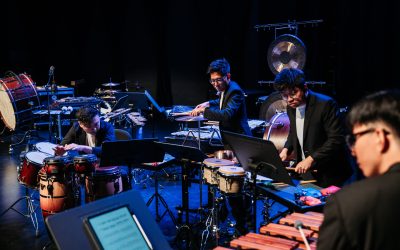
In this preview, our writing team speaks with three Singapore composers, Alicia De Silva, Eric James Watson, and Tan Yuting, to provide a behind-the-scenes glance into the musical inspiration behind Ding Yi’s latest production, which will premier on 6 and 7 June.
Contributed by Joel Tan
I never thought about where the costumes of lion dancers came from. I always thought they just had them—like how houses always had a door (and if yours doesn’t, you might want to fix that). Recently, I had an opportunity to learn about some of these traditional trades in Singapore, the characters of the artisans that championed them, and learnt about how their crafts are slowly drifting into obscurity.
Information flies by too quickly today that we often miss the craftsmanship in the things around us. We fail to notice the subtle intricacies in our everyday objects, like the rattan chair in the corner of our grandparents’ home, or the common Malay songkok we see during festive occasions. While these objects may still exist, the traditional processes behind them are fading. Industrialisation often takes over in production, leaving little demand for the handmade, and consequently, the handmakers.
Ding Yi Music Company’s Disappearing…Series: The Last Episode is the final instalment of an ongoing project exploring vanishing traditional crafts in Singapore. This concert features a multimedia presentation involving three composers, each with pieces inspired by different traditional trades: lion dance head-making, Malay songkok making, and rattan weaving. Each composition is a musical response to a craft, shaped by the composers’ direct encounters with the artisans, and performed alongside additional media during the concert.
The first piece, Tan Yuting’s Crafting Lions, Writing dreams 《扎狮·写梦》, was inspired by the art of lion head-making. Championed by artisan Henry Ng, this meticulous process demands both discipline and patience. Constructing a single lion head takes about ten days: one must build the frame out of bamboo, painstakingly coat it with layers of papier-mâché-like material, before painting and decorating the head, and finally adding the embellishments and fur trimmings.
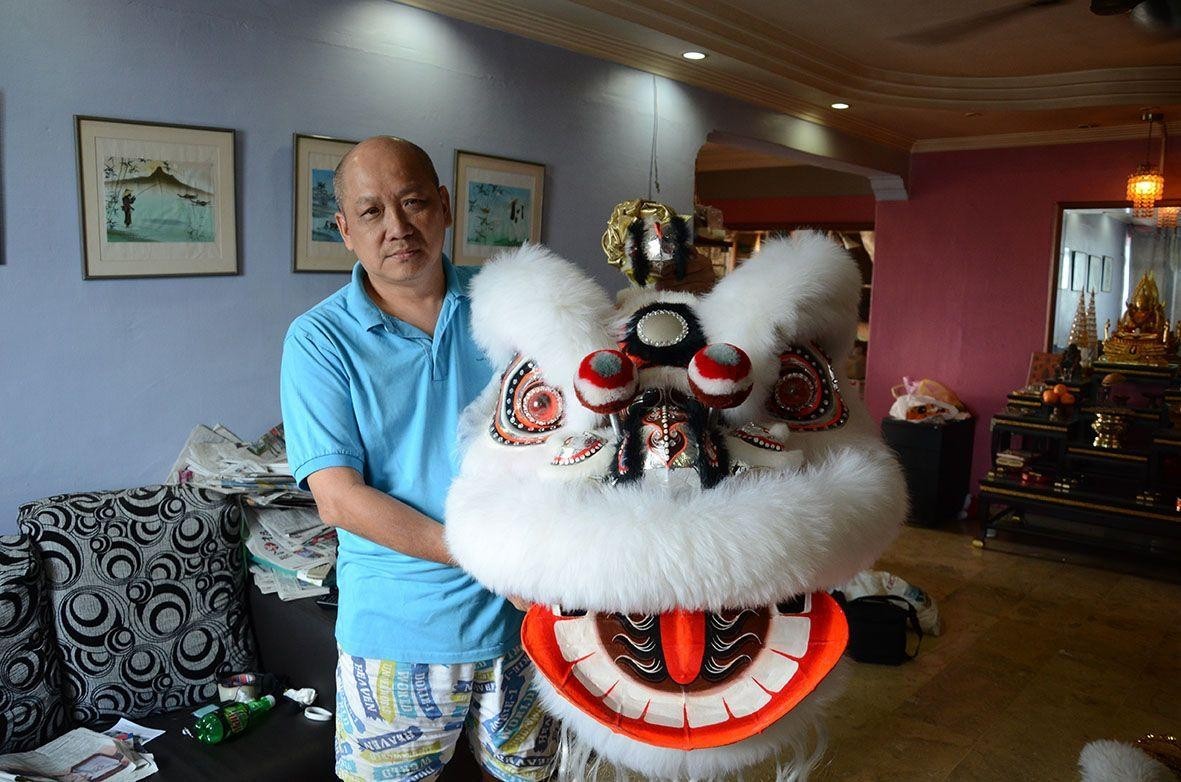
Uncle Henry (Henry Ng) in his home where he works
This process is reflected in Tan’s writing, with the four movements emulating the stages of the process. The skeletal and bare texture of the first movement reflects the bending of bamboo to build the structure of the lion’s skull, followed by fluid, continuous sounds like the sheng in the second movement. Over time, the instruments are slowly added and ‘glued’ to the texture. The third movement begins with a gentler pace and introspective mood, fitting for Uncle Henry’s favourite stage, painting, where he exercises his creativity. Finally, the lion’s head is completed in the last movement. With a slightly more familiar character, the lion pounces to life, the music embodying a much more spontaneous and dynamic character.
De Silva Alicia Joyce’s Love and Legacy follows the story of Hj Abdul Wahab Bin Abdullah, Singapore’s last known traditional songkok craftsman. De Silva herself performs in her piece, playing the gamelan instruments gender and bonang, reflecting Mr Wahab’s Javanese heritage. The work is structured in four movements, each corresponding to a facet of Mr Wahab’s journey with the craft.

Mr Wahab (Hj Abdul Wahab Bin Abdullah) in his workshop
The first movement is a tribute to Mr Wahab’s inheritance of the craft from his father, while the final movement conveys a hope that he can pass this legacy on through his son. In between, the second and third movements delve deeper into the essence of the craft itself. The rhythmic pulsation in the second mimics the regularity of a sewing machine, the consistency reminds a little of American minimalism. The third movement begins with a full ensemble of instrumental layering, leading into an improvisatory solo by De Silva. The texture afterwards is more intricate and features different instrumental combinations shaped by the fabric layering of the songkok. The last movement recalls materials from the previous sections. It is quieter, less active, and much stiller, perhaps suggesting a reflection on the craft as well as a subtle desire for it to be passed on.
Finally, Eric James Watson’s Rattan is inspired by the intricate art of rattan weaving. Unlike the other two works, Watson’s composition is continuous, ending the showcase with a single-movement composition.
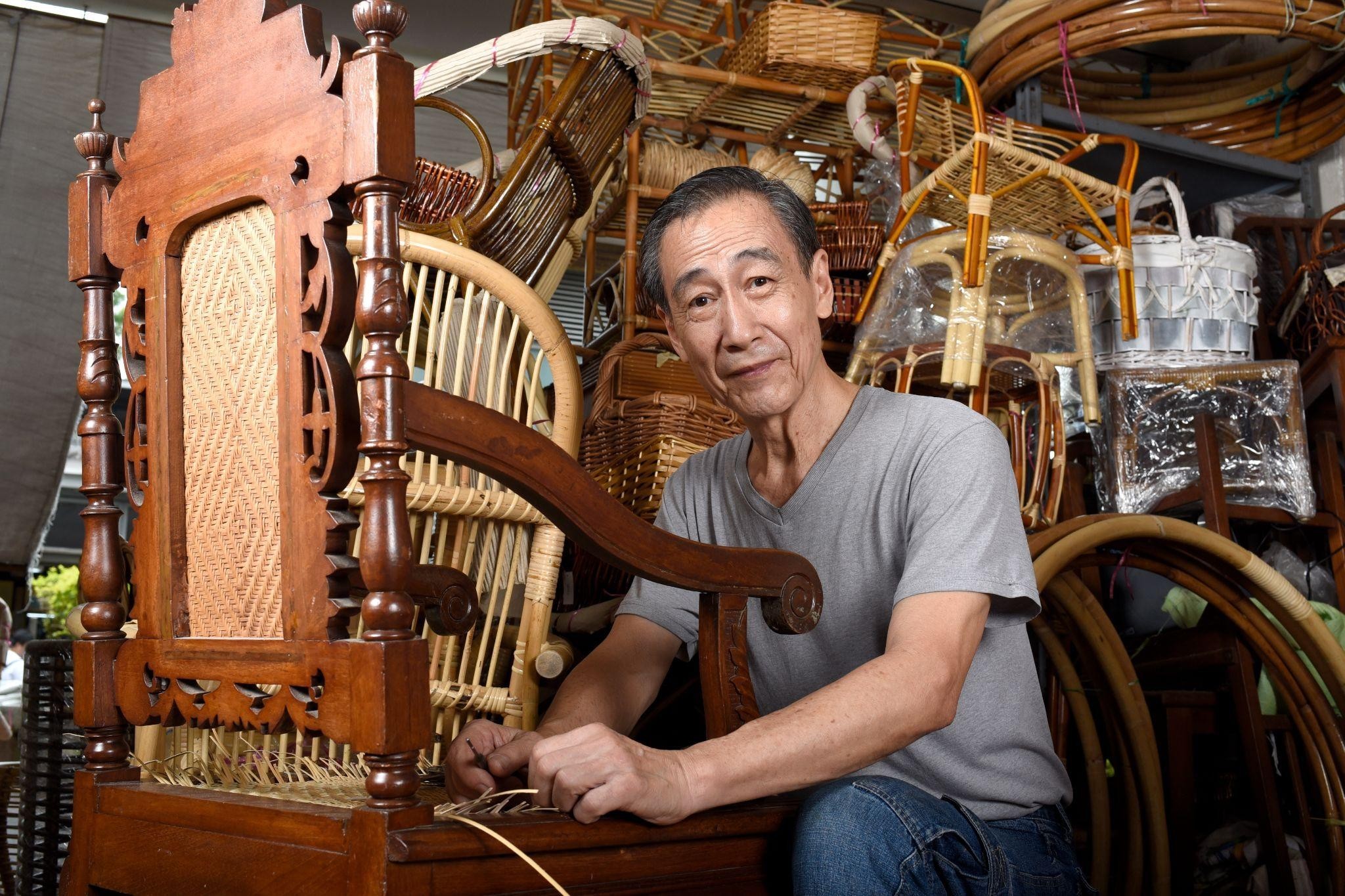
Mr Chen (Chen Foon Kee) repairing a rattan chair
Watson was impressed not only by the intricacy of the woven object, but by the granularity of the process. Each single rattan cane, often thicker than our thumbs, has to be shaved off to an appropriate thickness before it can be used. Every piece has to be properly cared for before it is twisted, woven, and intertwined together, and this interconnectivity is realised in his music through melodic counterpoint and thematic interweaving. While creating this piece, Watson paints a more optimistic perspective on the craft. Though there may not be a practitioner to pick up the fading craft, it may be interpreted as the rattan being returned to the forest; its roots.
Tied by similar themes, it makes sense that common threads exist across the pieces. While I had the opportunity to talk to the composers, the thing that stood out most was their deep admiration for the artisans. As craftsmen themselves, the composers understood well what it meant to hone a craft, and hold substantial respect for the artisan’s quiet dedication, discipline, and sincere love for their act of making.
As a result of modernisation reducing the relevance of traditional crafts in Singapore, these makers are in many ways the last torchbearers of their trades. We often overlook these common items, and though they might still exist, their authentic crafting processes are slowly vanishing. These products carry the fingerprints of entire lives. But as we continue to rush towards our futures, what are we willing to leave behind?
Disappearing…Series: The Last Episode
Presented by Ding Yi Music Company
6 June 2025, Fri, 7.30pm
7 June 2025, Sat, 3pm
Singapore Chinese Cultural Centre Auditorium, Level 9
Tickets